Florida window tinting laws apply to every vehicle registered in the state, and Tampa drivers face some of the strongest reasons to tint. Year-round sun, Gulf Coast humidity, and salt air from Tampa Bay accelerate UV damage to paint and interiors. The challenge is choosing the right shade without crossing into illegal territory.
Florida window tinting laws 2026 are governed by Florida Statute 316.2953, which sets specific limits on how dark and how reflective window film can be. This guide breaks down every rule window by window, explains the difference between sedan and SUV limits that most Tampa drivers do not know about, and covers what happens during a traffic stop when an officer checks your tint. Window tinting in Tampa, FL that meets these legal standards starts with understanding exactly what the law requires.
Why Florida Tint Law Matters More in Tampa
Tampa’s driving environment creates real demand for window tinting. Commuters on I-275, the Veterans Expressway, and Hillsborough Avenue face sustained UV exposure on every trip. The Gulf Coast sun pushes cabin temperatures past 140 degrees in parked vehicles during summer months. Salt air from Tampa Bay introduces airborne particles that accelerate interior fading and surface deterioration.
Window tinting is a practical solution to all of these problems. The law, however, determines what is allowed. Florida law enforcement takes tint compliance seriously. Officers in Hillsborough County carry handheld tint meters and check front windows during traffic stops. Tampa drivers who install tint without understanding the legal limits face fix-it tickets, fines, and the cost of removing non-compliant film.
Getting the law right before booking an installation saves time and money. It also means the tint performs at the legal maximum rather than at a shade chosen out of unnecessary caution.
Florida Window Tint Law 2026: Window by Window
Florida tint law measures darkness using Visible Light Transmission, commonly called VLT. VLT is the percentage of visible light that passes through the film and the glass combined. A 28% VLT window allows 28% of light through and blocks the remaining 72%. Lower numbers mean darker tint.
The law sets different VLT minimums for different window positions and different vehicle types. Here is the complete 2026 breakdown.
Windshield
Non-reflective tint is permitted only above the manufacturer’s AS-1 line. The AS-1 line is typically 5 to 6 inches from the top of the windshield and is etched or marked directly on the glass. No aftermarket tint is permitted below this line on any vehicle. A visor strip above the AS-1 line is legal and reduces low-angle glare from the east-west orientation of major Tampa roads during morning and afternoon commutes.
Front Side Windows: All Vehicles
Must allow more than 28% VLT. This applies to every vehicle regardless of type. Sedans, SUVs, trucks, and vans must all meet the 28% minimum on front side windows. This is the most commonly enforced measurement in Florida because it is the most commonly violated.
Rear Side Windows: Sedans
Must allow more than 15% VLT. Sedans have a minimum on rear side windows. 15% is a relatively dark legal shade and gives Tampa sedan owners meaningful heat and privacy protection while remaining fully compliant.
Rear Side Windows: SUVs, Trucks, Vans, and Station Wagons
No VLT restriction. Florida law draws a clear distinction between passenger cars and multi-purpose vehicles on rear glass. SUV, truck, and van owners can legally apply 5% limo tint to every rear side window without violating Florida law. This is confirmed under Florida Statute 316.2953 and applies across Hillsborough County and all of Florida.
Rear Windshield: Sedans
Must allow more than 15% VLT. Same minimum as rear side windows for sedan drivers.
Rear Windshield: SUVs, Trucks, and Vans
No VLT restriction. The same freedom that applies to rear side windows extends to the rear windshield for multi-purpose vehicles.
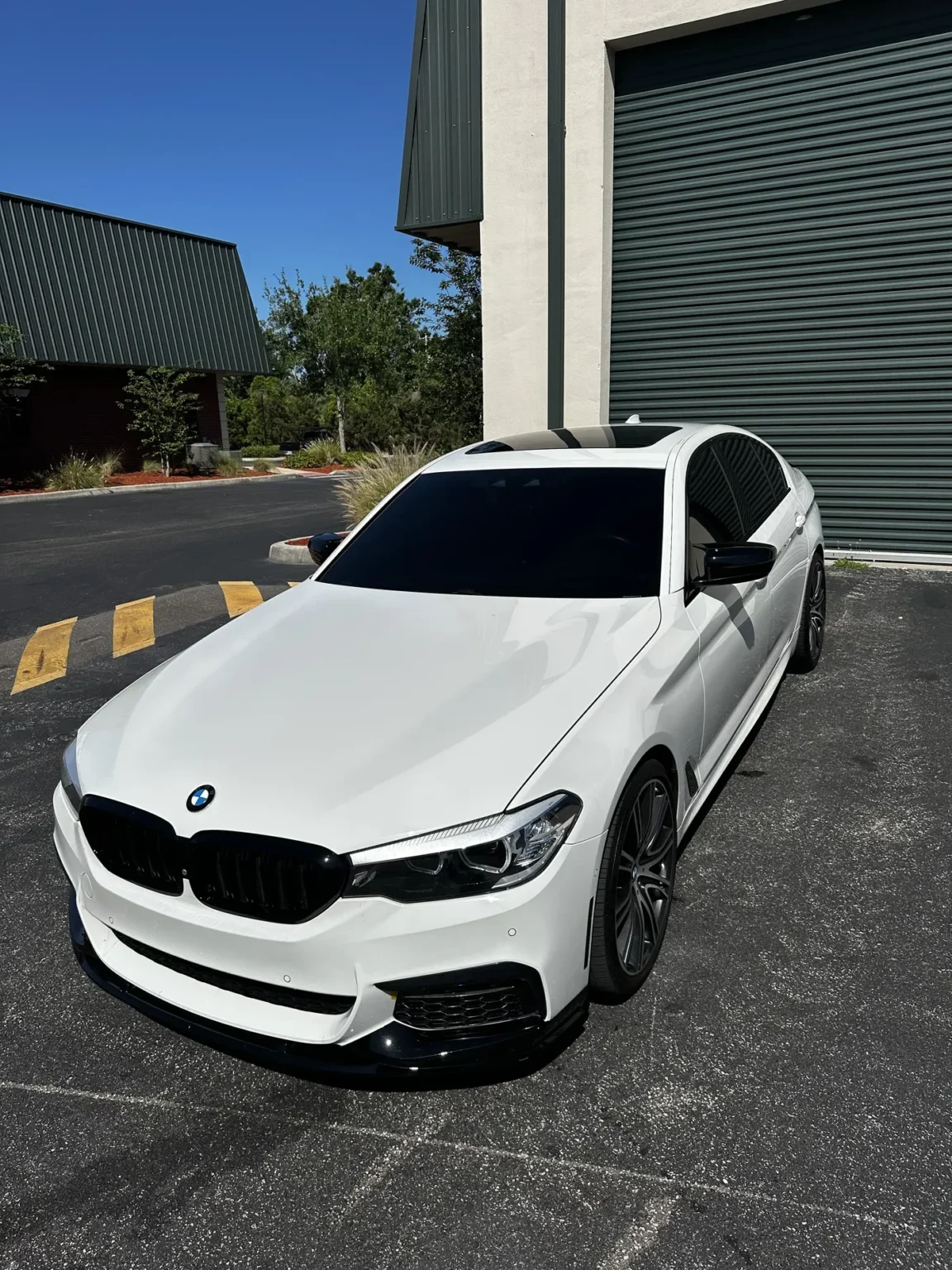
The Sedan vs SUV Difference Every Tampa Driver Should Know
This distinction changes the tinting decision completely for a large share of Tampa drivers, and most do not know it exists until they ask at an installation appointment.
Tampa’s vehicle mix includes a high proportion of trucks, SUVs, and pickup trucks given the city’s outdoor recreation culture, Gulf Coast lifestyle, and working vehicle population. For all of these vehicle types, Florida law removes all VLT restrictions on rear glass entirely.
| Window Position | Sedan VLT Minimum | SUV / Truck / Van VLT Minimum |
| Windshield | AS-1 line only | AS-1 line only |
| Front side windows | More than 28% | More than 28% |
| Rear side windows | More than 15% | No restriction |
| Rear windshield | More than 15% | No restriction |
A Tampa driver in a Ford F-150 can legally go to 5% limo tint on every rear window. A Tampa driver in a Honda Accord is restricted to 15% minimum on all rear glass. Same law, same city, completely different legal options, determined entirely by the vehicle type on the registration.
Many truck and SUV owners in Tampa tint their rear glass at 20% or 35% out of unnecessary caution when they could go to 5% with no legal risk at all. Understanding this before booking saves the cost of redoing the rear glass at a darker legal shade later.
SS Wraps and Tints confirms the legal limits for each specific vehicle type at every consultation before any film is selected. Every installation leaves the shop with the correct VLT for the registered vehicle type.
Reflectivity Rules and Prohibited Colours
Florida law regulates not just how dark the tint is but how reflective it appears. Reflective and mirrored films create visibility hazards for other drivers and are restricted.
Reflectivity limits:
- Front side windows: Must not be more than 25% reflective
- Rear side windows: Must not be more than 35% reflective
- Mirror-finish and metallic films are prohibited on all windows
Carbon and ceramic films typically reflect less than 15%, well within legal limits on all window positions. Geoshield C2 Carbon, Ceramic, and Apex Ultra all fall within Florida’s reflectivity requirements.
Prohibited colours:
Florida law prohibits the following tint colours on any vehicle window regardless of VLT or reflectivity:
- Red
- Amber
- Blue
Legal shades are grey, black, charcoal, and neutral tones. All Geoshield products used in Tampa are produced in legally compliant neutral shades.
For the full text of Florida’s tinting statutes, Florida Statute 316.2953 is the governing law and is publicly available on the Florida Legislature website.
The Compliance Sticker Requirement
Florida law requires a compliance sticker affixed to the inside of the driver’s side door jamb for any legally tinted vehicle. The sticker records the film’s VLT rating and the installer’s details. This requirement applies to all legally tinted vehicles across Florida.
Most Tampa drivers are unaware this requirement exists until they are stopped. A vehicle tinted at a non-certified shop or with DIY film frequently lacks this sticker. The absence of the compliance sticker is itself a violation, separate from whether the VLT meets the legal minimum.
Certified installers provide a compliance sticker with every legal tint job. SS Wraps and Tints provides the required Florida compliance sticker with every tint installation at the facility at 13323 W Hillsborough Ave in Town ‘n’ Country.
Tampa Enforcement: What Actually Happens
Florida law enforcement enforces tint compliance consistently during traffic stops across Tampa and Hillsborough County. Officers carry handheld tint meters and check front windows specifically because front side windows are the most commonly violated position.
The enforcement sequence at a typical Tampa traffic stop runs as follows. The officer stops the vehicle for any reason, whether speeding, a lane change, or a registration issue. The officer checks the front window VLT with a tint meter. A reading below 28% triggers a citation.
First-offence citations are typically fix-it tickets. The driver receives 30 days to remove the non-compliant tint and show proof at a local police station or courthouse. Courts commonly dismiss the fine once compliance is demonstrated. Ignoring the citation leads to escalating fines and licence suspension for unpaid violations.
Tampa roads with the highest tint enforcement activity include I-275, the Veterans Expressway, Dale Mabry Highway, and Hillsborough Avenue. These are the major arterials with the highest law enforcement presence in the metro area.
One additional point for Tampa drivers: when a windshield is replaced, any tint film on the windshield itself goes with the old glass. Road debris from I-275 construction zones and the Veterans Expressway corridor creates more windshield damage in Tampa than in most Florida markets. Drivers who have their windshield replaced need to have the visor strip reapplied after the new glass is installed.
Medical Exemption for Darker Tint in Florida
Florida allows medical exemptions for window tint that exceeds the standard legal VLT limits. Qualifying conditions include lupus, photosensitivity disorders, skin cancer, dermatological conditions, and other documented conditions where UV exposure creates a medically confirmed risk.
To qualify for a medical exemption in Florida:
- A licensed Florida physician or optometrist must provide a signed written statement specifying the medical condition and the need for darker tint
- The documentation must be carried in the vehicle at all times and presented to law enforcement on request
- The exemption covers darker tint than the legal minimum but does not eliminate all restrictions
Tampa drivers who may qualify should speak with their treating physician before applying. The documentation required is a signed statement from the physician, not a formal DMV application process like some other states require.
How to Choose Legal Tint That Performs in Tampa Heat
Legal compliance sets the floor. Within the legal VLT limits, the film technology determines the actual heat, UV, and glare protection the driver receives. This is where the choice between dyed, carbon, and ceramic film matters most for Tampa’s conditions.
At 28% VLT on front windows, the legal limit for all Florida vehicles, a dyed film blocks some UV and reduces visible glare. A ceramic film at the same 28% VLT blocks up to 99% of UV radiation and rejects up to 98% of infrared heat. Both are equally legal. The performance difference on Tampa roads is immediate and significant.
Geoshield film guide for Tampa legal compliance:
| Film | VLT Options | Best For |
| Geoshield C2 Carbon | Multiple legal shades | Rear glass on sedans and all glass on SUVs and trucks. Strong colour stability and solar performance above dyed film. |
| Geoshield Ceramic | Multiple legal shades including 28% front legal | Front windows where the 28% VLT limit constrains darkness. Maximum performance at legal shade. |
| Geoshield Apex Ultra | Lightest to full rear freedom | Best overall for Tampa heat. Dual-layer super ceramic with maximum infrared rejection at any legal shade. |
Every Geoshield installation comes with a lifetime warranty against peeling, bubbling, and fading, and includes the Florida compliance sticker for the driver’s side door jamb.
Conclusion
Florida window tinting laws in 2026 set clear limits by window position and vehicle type. Front side windows require a 28% VLT minimum on every vehicle. Sedan rear glass requires a 15% VLT minimum. SUV, truck, and van rear glass has no restriction at all. Tampa drivers in these vehicles can go to 5% limo tint legally on every rear window.
Understanding these rules before booking a tint appointment means choosing the right shade the first time, avoiding enforcement issues, and getting the most performance the law allows. SS Wraps and Tints handles every installation at the 13323 W Hillsborough Ave facility in Town ‘n’ Country using Geoshield USA films across Tampa, Northwest Tampa, West Tampa, Seminole Heights, and the surrounding area.
Frequently Asked Questions
What is the legal window tint percentage in Florida in 2026?
Front side windows on all vehicles must allow more than 28% VLT. Sedan rear side windows and rear windshields must allow more than 15% VLT. SUV, truck, and van rear side windows and rear windshields have no VLT restriction. Any darkness is legal, including 5% limo tint. Windshield tint is only permitted above the AS-1 line as a non-reflective visor strip.
Can SUVs and trucks go darker than sedans in Florida?
Yes. Florida law distinguishes between passenger cars and multi-purpose vehicles on rear glass. SUVs, trucks, vans, and station wagons have no VLT restriction on rear side windows and the rear windshield. Sedan owners are restricted to a 15% minimum on the same windows. Both vehicle types must meet the 28% minimum on front side windows.
What happens if your window tint is too dark in Tampa?
A Tampa officer can check the front window VLT with a tint meter during any traffic stop. A reading below 28% on front windows triggers a citation. First offences are typically fix-it tickets with 30 days to remove the non-compliant film and show proof of compliance. Ignoring the citation can result in escalating fines and licence suspension.
Do you need a sticker for window tint in Florida?
Yes. Florida law requires a compliance sticker on the inside of the driver’s side door jamb for any legally tinted vehicle. The sticker records the VLT rating and installer information. Vehicles tinted without this sticker violate Florida law regardless of whether the VLT itself meets the legal minimum. Certified professional installers provide this sticker as part of every legal installation.
Can you get a darker tint than the legal limit in Florida for medical reasons?
Yes. Florida allows medical exemptions for drivers with conditions such as lupus, photosensitivity disorders, skin cancer, and other documented conditions where UV exposure is medically harmful. A signed statement from a licensed Florida physician or optometrist is required and must be carried in the vehicle at all times. The documentation is presented to law enforcement on request when darker-than-legal tint is installed under exemption.
How long does window tinting last in Tampa’s climate?
Professionally installed Geoshield window film by certified Tampa installers lasts 10 to 15 years or more. Tampa’s intense sun, Gulf Coast humidity, and salt air make film quality and installation technique more consequential to lifespan than in milder markets. All Geoshield installations come with a lifetime warranty against peeling, bubbling, and fading.